Guide
Nearshore T-Shirt Manufacturing in Mexico: A Guide for US Brands
Why US brands are moving tee programs closer to home, and what to ask before you commit.
Share a few details and we’ll reach out to set up a call.
Updated November 2026
For years, the default for a brand's tee program was simple: send artwork overseas, wait for a container, and plan the season around a long, uncertain lead time. More brands are now moving their tee, long sleeve and fleece programs closer to home. This guide explains why, what actually changes when you produce nearshore, and what to ask before you commit to a manufacturer in Mexico.
What "nearshore" means for apparel
Nearshore manufacturing means producing in a country close to your main market. For US brands, that usually means Mexico or Central America instead of Asia. The garments are the same category of product. What changes is distance, transit mode and how much of the calendar is spent waiting.
Premium Shirts, for example, runs its factory in Lerma, Mexico, with ground freight into the United States through Laredo, Texas. That proximity is what makes 30, 60 or 90-day production timelines possible.
Why brands move tee programs from Asia to nearshore
Shorter, more predictable lead times
Overseas production adds ocean transit, port handling and customs time on top of manufacturing. Every one of those steps can slip. When the factory is a truck ride from the border, the gap between "approved" and "on the shelf" shrinks, and there are fewer points where a delay can hide.
Predictability matters as much as speed. A launch date is only useful if you can trust it. Ask any manufacturer for their on-time delivery rate. Premium reports 99%+ on-time delivery across its programs.
Freight you can plan around
Ground freight to the US border removes the container booking cycle from your planning. It also makes smaller, more frequent deliveries more practical, which helps when you want to test a graphic, react to sell-through or replenish a bestseller without carrying a full season of inventory.
Faster reaction to what is selling
A shorter cycle means you can make decisions closer to the season. If a colorway is selling through, you can reorder it. If a graphic misses, you have not committed a year of volume to it. Programs with evergreen replenishment or vendor-managed inventory (VMI) take this further. At Premium those options start at the Grow tier (see Grow programs).
Easier oversight
Being closer makes it easier to stay involved in development: lab dips, strike-offs and samples move faster, and approvals take days instead of weeks of back and forth across time zones.
CTPAT and customs: why it matters
CTPAT (Customs Trade Partnership Against Terrorism) is a US Customs and Border Protection program for supply chain security. Working with a CTPAT certified manufacturer generally means smoother movement through US Customs. Premium Shirts is CTPAT certified.
When you evaluate any nearshore partner, ask:
- Are you CTPAT certified?
- Who handles customs at the border, and is that cost in my quote?
- Where does your price stop? (FOB terms tell you where responsibility for freight transfers to you.)
- Do my goods qualify for any trade agreement preferences, and who documents that?
Premium prices FOB Laredo, TX, and the unit price includes shipping to Laredo. Ask us how import costs work for your program and we will walk through it with your quote.
Minimums: what to expect nearshore
Nearshore does not automatically mean small runs. A full-package manufacturer that spins, knits, dyes, sews and prints needs enough volume to justify setting up a program. Expect minimums per program, per graphic and per colorway.
As a reference point, Premium's programs start at:
- 2,500 units a year per program
- 300 units per graphic
- 150 units per colorway
A single graphic can be split across men's, women's and youth styles, as long as each graphic reaches 300 units and each colorway reaches 150. Custom fits start around 25,000 units a year and custom fabrics around 100,000 units a year.
If you need fewer than 2,500 units a year, a print-on-demand, small-batch or blank apparel supplier is likely a better fit. Premium keeps a partner directory of those options.
Vertical integration: the part that makes nearshore work
Being close to the border helps, but it is not the whole story. If your manufacturer still buys fabric from one vendor, sends cutting to another and printing to a third, you inherit every handoff delay. The real gain comes when the same team controls yarn, knitting, cut and sew, printing, finishing and packing.
Premium runs every stage in its own facilities: yarn and fabric, cut and sew, graphics and print, finishing and packing, and shipping. That is a big part of why its QA pass rate sits at 98%+.
Questions to ask a nearshore t-shirt manufacturer
Use this list on your first call with any manufacturer, in Mexico or elsewhere:
- What do you make in-house, and what do you subcontract? Ask stage by stage: fabric, dyeing, cut and sew, print, finishing.
- What are your real lead times? Ask what drives a 30-day run versus a 90-day run.
- What is your on-time delivery rate, and how do you measure it?
- What are your minimums per program, per graphic and per colorway?
- What is included in the unit price? Design, labels, hang tags, poly bags, freight to the border?
- What are your FOB terms?
- What audits and certifications do you hold? Look for CTPAT, social compliance such as Sedex SMETA, and restricted substance testing.
- What inspection standard do you use? AQL 2.5 is a common benchmark for apparel.
- Will everything ship under my brand? Neck labels, care labels, hang tags and packaging.
- Which brands like mine have you worked with? Ask for case studies. Premium's are on its projects page.
Is nearshore right for your brand?
Nearshore tends to make the most sense if you:
- Sell graphic tees, long sleeves or fleece at retail or direct to consumer
- Run 2,500 or more units a year and expect to grow
- Lose sales to late deliveries or stockouts
- Want to test and reorder graphics without committing a full season up front
It is less of a fit if you need very small runs, or product outside knits. Premium, for instance, does not make outerwear, polos or woven shirts, and does not sell blank apparel on its own.
FAQ
Why are US brands moving t-shirt production to Mexico?
Mainly for shorter, more predictable lead times, simpler ground freight into the US and faster reaction to sell-through. A vertically integrated nearshore manufacturer can deliver on 30, 60 or 90-day timelines.
How long does nearshore t-shirt production take?
It depends on styles, decoration and quantities. Premium Shirts quotes 30, 60 or 90-day production timelines from its factory in Lerma, Mexico.
What is CTPAT and why does it matter for apparel?
CTPAT is a US Customs and Border Protection supply chain security program. A CTPAT certified manufacturer generally moves goods through US Customs more smoothly. Premium Shirts is CTPAT certified.
What are typical minimums for a nearshore tee manufacturer?
They vary by factory. Premium Shirts programs start at 2,500 units a year, with 300 units per graphic and 150 units per colorway.
What does FOB Laredo mean?
It means the quoted price covers the product delivered to Laredo, Texas. From there, freight to your warehouse is your responsibility. Premium's unit price includes shipping to Laredo.
Talk to a nearshore manufacturer
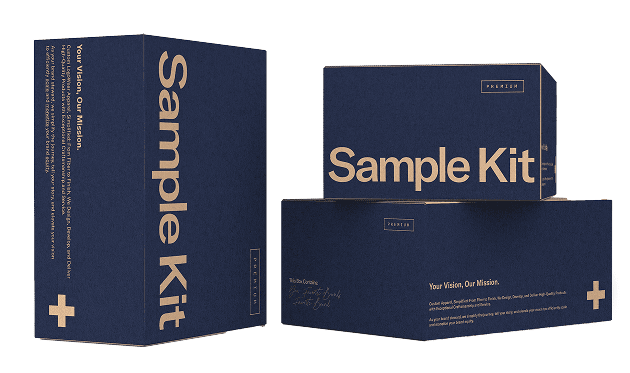
If you are weighing a move from overseas production, start with a conversation about your volumes, styles and launch dates. Book a 30-minute intro call or request pricing and a sample kit.